
Getting Started
Monitoring Alignment and Risk History
Frequently Asked Questions
Getting Started
How to Build a Risk Profile:
1. Select Risk Profiles from the Tools dropdown menu.
.jpeg?width=670&height=374&name=Ycharts%20Workflow%20-%20Step%200%20(7).jpeg)
2. Assign the risk profile a name (which will be seen internally) and a report display name (which will be seen externally on PDF reports). Optional: add a description.
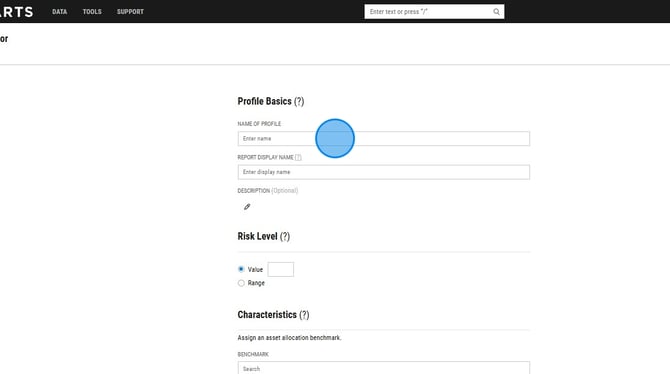
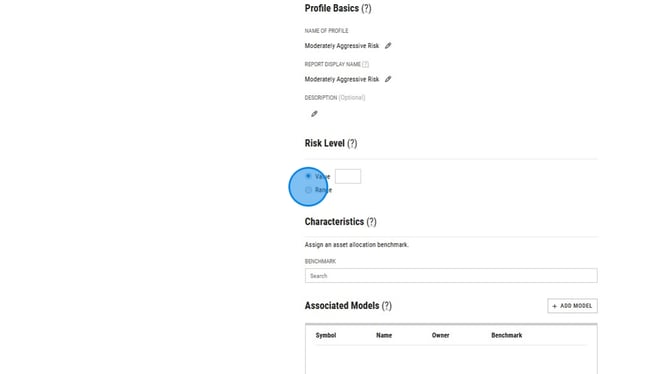
3. Choose a Risk Level, either a numerical value, qualitative label, or range.
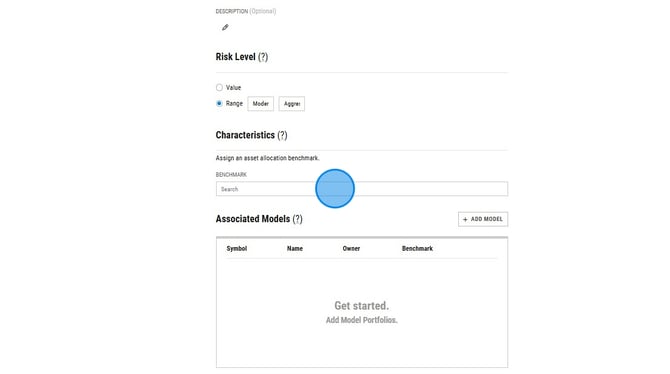
4. Assign a benchmark.
5. Assign a target, low, and high value for each broad asset class.
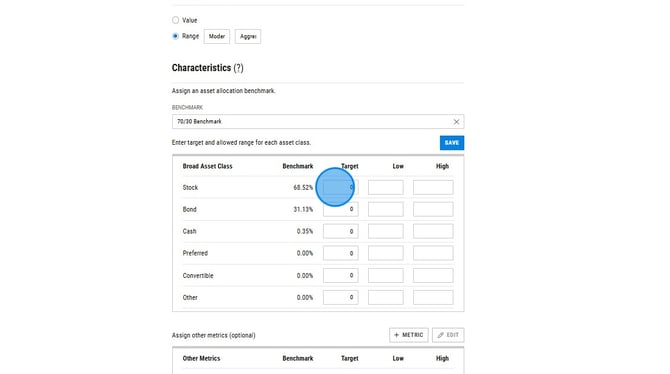
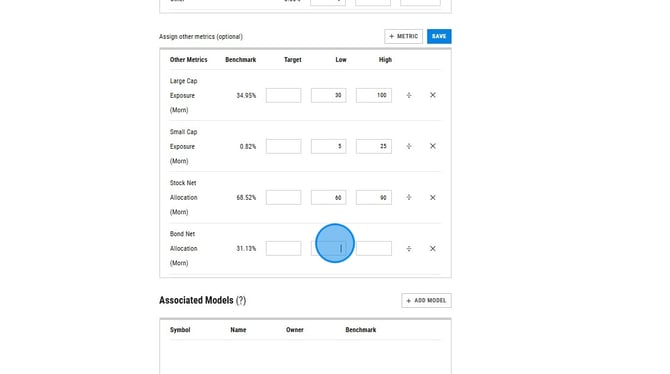
7. Optional: Assign other metrics - these are what will appear in the Risk Profiles module in a PDF report.
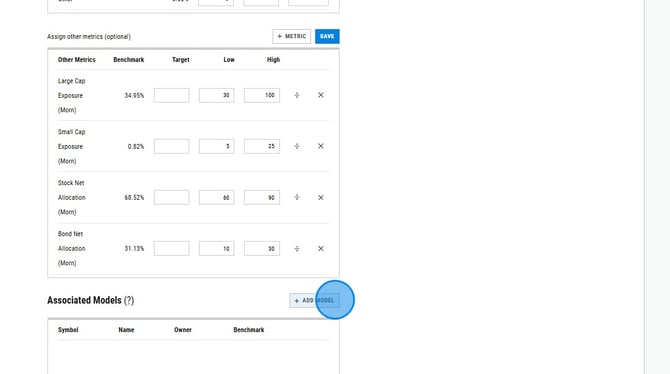
7. Add in your associated models. Once finished, select Save at the top right of the page.
Monitoring Alignment and Risk History
Once a risk profile is assigned, RPM will keep watch - flagging when a client's actual holdings drift from the target, and keep a running log of every change for reference.
How to Monitor Alignment and Review History:
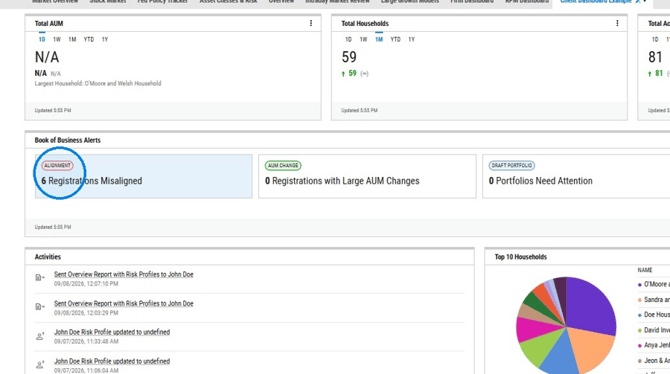
1. If a client's allocation drifts too far from their assigned risk profile, it's flagged as misaligned and is added to the Alerts module on your RPM dashboard.
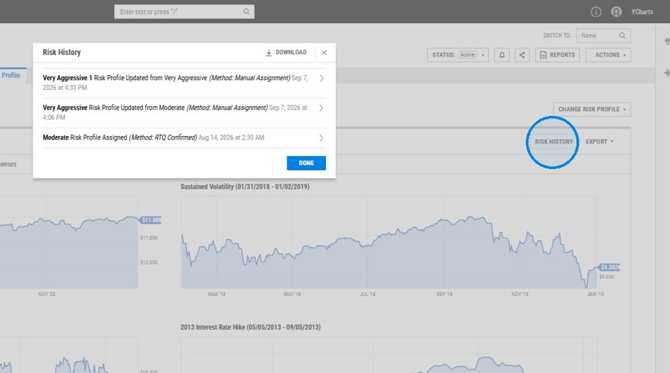
2. From the client's Risk Profile tab, select Risk History to see a full log of past changes, including any manual overrides and the notes logged with each one.
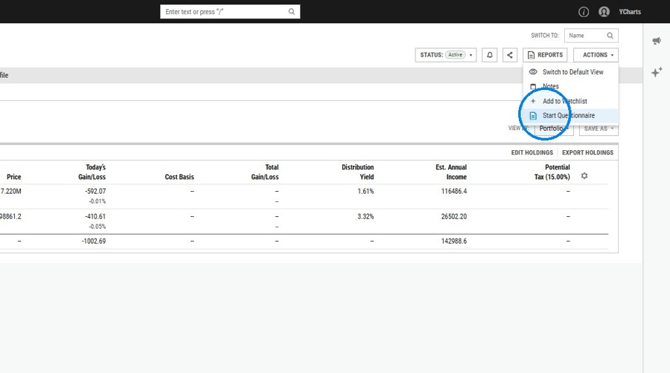
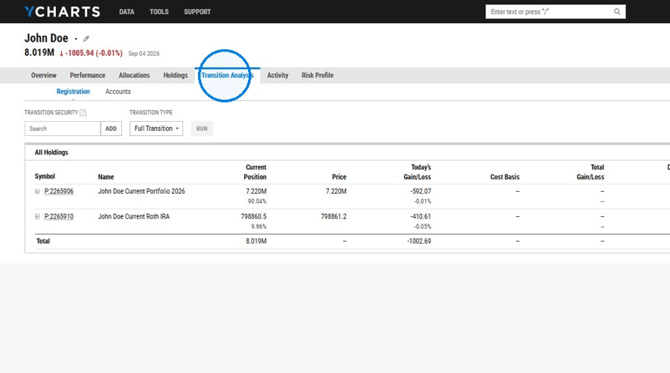
3. To bring a misaligned client back in line, you can either send off a new RTQ under Actions if their circumstances have changed, or use the Transition Analysis tool to make trades towards the target.
Frequently Asked Questions
Can a client have more than one risk profile assigned at a time?
-
No, only one risk profile can be actively assigned per client. Previous assignments stay visible in Risk History.
What happens to the risk profile I compared against but didn't assign?
-
It isn't saved to the client's record. If you want to revisit it later, you'll need to run the comparison again.
Can I assign a risk profile at the household level?
-
Yes, risk profiles can be assigned to households.
Does YCharts push the risk profile data back to my integration?
-
No, this data will only stay within YCharts.